The Hidden Details of Investment Fees: What Canadian Investors Should Understand
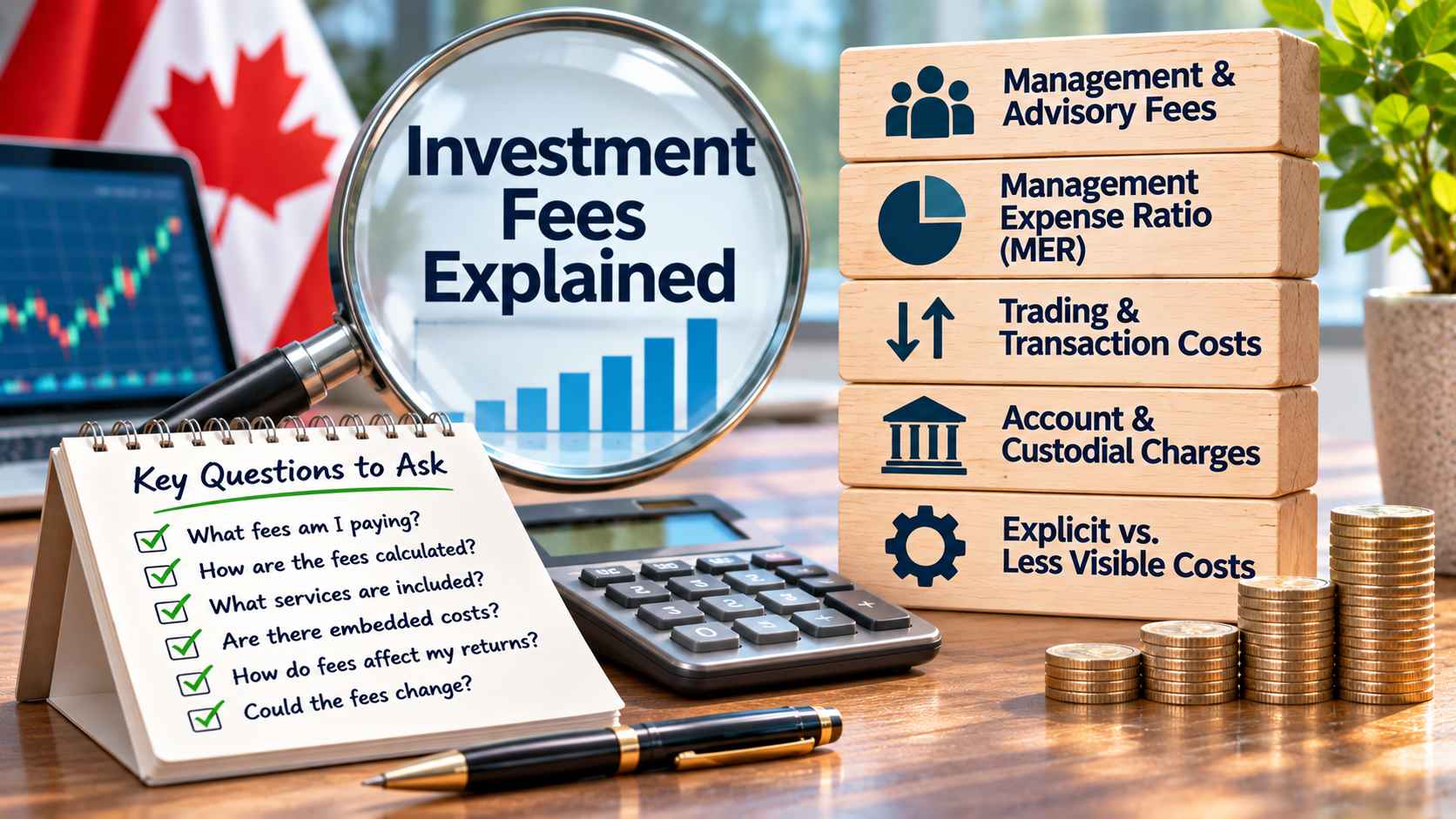
An investment portfolio may show steady growth, but the returns displayed on a statement do not always tell the complete story. Behind the investment performance are costs associated with managing assets, maintaining accounts, executing transactions, and providing professional advice.
Some of these expenses appear clearly on account statements. Others are incorporated into investment products and may be less noticeable.
For Canadian investors, understanding these charges is an important part of evaluating whether an investment arrangement meets their financial needs.
Investment fees are not inherently unreasonable. Professional services, investment administration, and portfolio management involve costs. The important question is whether those expenses are transparent, appropriate, and consistent with the services provided.
Why Understanding Investment Fees Matters
Investment costs influence the amount of money investors ultimately retain.
Two portfolios with similar investments may produce different net results if their fees and expenses differ.
However, comparing fees is not always straightforward.
Different investment firms may use different compensation arrangements, while mutual funds and exchange-traded funds (ETFs) have their own internal expenses.
For example, an investor might pay an advisory fee directly to an investment firm while also holding funds with embedded management expenses.
Without understanding both costs, the investor may underestimate the total expense of maintaining the portfolio.
Fee transparency helps investors evaluate financial arrangements more effectively and ask informed questions.
Understanding Investment Management and Advisory Fees
Management and advisory fees are common expenses associated with professional investment services.
These fees compensate professionals for managing portfolios, providing investment advice, monitoring holdings, or delivering other agreed services.
Percentage-Based Management Fees
Some investment managers charge an annual percentage of the assets they manage.
The amount paid may therefore change as the portfolio’s value changes.
Investors should confirm how the fee is calculated, how frequently it is charged, and which services are included.
Flat-Fee and Other Advisory Arrangements
Other professionals may charge fixed amounts, hourly fees, or fees for particular planning services.
For example, a financial planning engagement may involve a separate charge from ongoing portfolio management.
Neither arrangement is automatically preferable.
The appropriate structure depends on the services required, the complexity of the portfolio, and the investor’s circumstances.
What Is a Management Expense Ratio?
Investors holding mutual funds or ETFs may encounter the term Management Expense Ratio, commonly called MER.
The MER expresses certain ongoing fund expenses as an annual percentage of the fund’s average net assets.
These expenses generally include the fund’s management fee, operating expenses, and applicable taxes.
Why MERs Are Sometimes Overlooked
Unlike a charge deducted directly from a bank account, fund expenses are generally reflected in the fund’s net asset value and performance.
This can make them less visible.
For example, an investor reviewing the value of a mutual fund may not see a separate withdrawal corresponding to its MER.
However, the expenses still affect the investment’s net return.
It is also important to distinguish the MER from a fund’s trading expense ratio, which reflects certain portfolio transaction costs and is generally reported separately.
Trading and Transaction Costs
Buying and selling investments can involve additional expenses.
These costs vary according to the type of investment, the trading platform, and the arrangement with the investment firm.
Brokerage Commissions
Some investment accounts charge commissions when securities are purchased or sold.
Other platforms may offer commission-free trading for selected products, although additional costs can still apply.
Bid-Ask Spreads
The bid-ask spread is the difference between the price buyers are willing to pay and the price sellers are asking.
This difference represents a trading cost that may not appear as a separate fee.
Currency conversion charges and certain fund transaction expenses can also affect investment costs.
Investors should understand the costs associated with buying, holding, and selling their investments.
Account Administration and Custodial Charges
Some investment arrangements include account-related expenses separate from management or product fees.
Depending on the provider, these may include:
- Account administration or maintenance fees.
- Custodial or trustee charges.
- Registered account administration fees.
- Transfer or account closure fees.
- Charges for selected account services.
Not every institution applies these charges, and some may be included within broader service arrangements.
Investors should review their account agreements and request clarification about charges that may apply under different circumstances.
Explicit Costs Versus Less Visible Expenses
An important distinction in investment fee analysis is whether a cost is charged directly or incorporated into an investment product.
Explicit costs generally appear as identifiable charges, such as advisory fees, commissions, or account administration expenses.
Embedded costs may be reflected in a fund’s performance or deducted within the investment product itself.
For example, an investor may see a clearly identified annual advisory charge but overlook ongoing expenses associated with the funds held in the account.
The Canadian Investment Regulatory Organization provides helpful information through its investor education guide to fees and costs.
Understanding both direct and embedded expenses provides a more complete picture of investment costs.
How Investment Fees Affect Long-Term Returns
Investment expenses can influence portfolio growth over time.
Fees reduce the amount of investment value available to benefit from subsequent returns.
This means that recurring expenses may have a cumulative effect over longer investment periods.
For example, consider two hypothetical portfolios with similar holdings and gross investment performance but different ongoing costs.
The portfolio with higher expenses would generally retain less of its gross return, assuming other factors remain equal.
Over multiple years, this difference can become more meaningful because returns compound on the amounts remaining invested.
However, lower fees do not guarantee better investment performance.
Portfolio composition, investment decisions, risk exposure, and market conditions also influence results.
Why the Lowest Fee Is Not Always the Best Choice
Cost is an important consideration, but it should not be the only factor when comparing investment services.
An investor managing a straightforward portfolio independently may require different services from a business owner coordinating corporate investments, retirement planning, and estate considerations.
Professional investment arrangements may include portfolio monitoring, asset allocation decisions, risk assessment, reporting, and ongoing communication.
Some providers also coordinate broader financial planning services.
The relevant question is whether the services offered justify the associated expenses for the individual investor.
Higher fees do not automatically indicate better quality, just as lower fees do not automatically mean an arrangement is more suitable.
Investors should assess costs alongside qualifications, investment philosophy, transparency, and personal financial needs.
Reviewing Fees Across an Entire Portfolio
Investment costs should be considered across the complete portfolio rather than one account at a time.
Someone holding multiple investment accounts may be paying different combinations of advisory fees, fund expenses, and account charges.
An investment portfolio review can help examine these expenses alongside asset allocation, diversification, risk exposure, and overall investment objectives.
For example, an investor may discover that several funds provide overlapping investment exposure while carrying separate ongoing costs.
However, identifying overlapping investments does not automatically mean they should be sold.
Investment suitability, tax implications, transaction expenses, and financial goals should also be evaluated before making changes.
Questions to Ask About Investment Fees
Investors can begin by reviewing account agreements, annual fee reports, fund disclosures, and transaction statements.
Useful questions include:
- What am I paying? Identify advisory, management, fund-level, transaction, and account-related expenses.
- How are fees calculated? Determine whether charges are based on assets, transactions, or fixed amounts.
- Are there embedded expenses? Ask about MERs and other fund costs.
- What services are included? Clarify whether financial planning, reporting, and ongoing reviews involve separate charges.
- Are there additional costs? Ask about currency conversion, transfers, and account administration.
- How do fees affect performance? Request an explanation of gross and net investment returns.
- Could fees change? Review applicable agreements and disclosure procedures.
Clear answers can help investors assess both costs and the value of the services received.
Evaluating Professional Portfolio Management
Some investors prefer managing their investments independently, while others value ongoing professional oversight.
Professional discretionary portfolio management services involve authorized investment professionals making portfolio decisions within an agreed investment mandate.
When evaluating this arrangement, investors should understand the manager’s qualifications, fee structure, investment approach, and reporting procedures.
They should also ask how investment decisions are connected to financial objectives and risk tolerance.
Professional management does not eliminate market risk or guarantee superior returns.
Its suitability depends on the investor’s financial circumstances, preferences, and service requirements.
Making Investment Fee Transparency a Priority
Understanding investment fees is an important part of responsible portfolio management.
Management charges, fund expenses, transaction costs, and account administration fees can affect investment results in different ways.
Some expenses are clearly identified, while others require closer examination of investment documents and disclosures.
By reviewing total costs and asking what services those charges support, Canadian investors can better evaluate their financial arrangements.
The objective is not simply to eliminate every expense. It is to understand what is being paid, why the cost exists, and whether the overall arrangement supports individual investment goals.
Transparent fees, suitable investment strategies, and informed decision-making provide a stronger foundation for evaluating long-term portfolio management.

Related Posts

How Economic Trends Affect Your Investments: A Guide for Canadian Investors

The Power of Financial Planning: Securing Your Future with Exponent Investment Management
